


Issue 97 Dec 2008
Buy this issue as a PDF
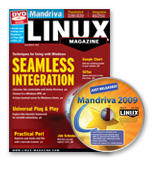
Cover Theme: Seamless Integration
DVD Theme: Mandriva 2009
Article Code
Even open source enthusiasts live in a world full of Windows, so this month we examine some expert techniques for better and more seamless integration with Windows environments. We look at cross-platform VPN connections, the admin-friendly Likewise Open authentication system, and how xrdp can help connect your Windows terminal clients to Linux.
But wait! There's much more – we also look at the tiny SliTaz Linux distro, the best Tops imitators, how to build your own Universal Plug & Play solution using the BRisa framework, rootkits, Open Source Job Scheduler, how to catalog your book and CD collection with a blend of Perl and barcodes, Thunderbird Add-Ons, iTalc classroom management software, BambooInvoice, and recent open source events, reviews, and news.
Issue 96 Nov 2008
Buy this issue as a PDF
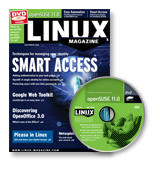
Cover Theme: Smart Access
DVD Theme: openSUSE 11.0
Article Code
Who is that user on the other end of the connection? After all these years, passwords are still the most common means for ensuring identity on the network. In this issue, we look at techniques for better password protection, including one-time passwords, Linux and Active Directory, OpenID, and web authentication.
Other articles cover OpenOffice 3.0, Picasa, Sockso, Pygmynote, Gnac, Gourmet Recipe Manager, Google Web Toolkit, FireHOL, Metasploit, Snort, Maxima, and OpenOffice Automation.
Issue 95 Oct 2008
Buy this issue as a PDF
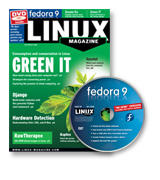
Cover Theme: Green IT
DVD Theme: Fedora 9
Article Code
Where is all the energy going? This month we examine power consumption in Linux. You’ll learn which system components use the most power, and we’ll help you sort fact from fiction in the new world of Green IT.
Other articles take a closer look at Django; the Gambas Basic IDE; Sysstat; the Open Source Voting Consortium; Gnome Do; RawTherapee; Gnome Commander; Udev, HAL, and D-Bus; Ksplice; DNS Attacks; and open source news, projects, and events.
Issue 94 Sep 2008
Buy this issue as a PDF
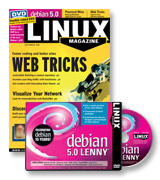
Cover Theme: Web Tricks
DVD Theme: Debian 5.0
Article Code
Web developers are always looking for an edge, so this month we explore tricks for faster, more effective websites. We look at trackbacks, Cascading Style Sheets, the Java Content Repository, and Apache load balancing.
Other articles examine Yoggie Gatekeeper Pico, Wine, TimeVault, OpenMP, BeeDiff, RadialNet, retouching photos with the help of a Perl script, the yafc ftp client, the OpenOffice.org Bookmarks Menu Extension, how to organize a community event, and reports from Red Hat Summit and USENIX.
Issue 93 Aug 2008
Buy this issue as a PDF
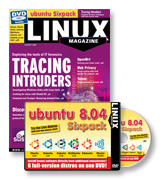
Cover Theme: Tracing Intruders
DVD Theme: Ubuntu 8.04 Sixpack
Article Code
If you uncover a break-in, proceed carefully, stay hidden, gather information, and make sure you don’t disturb any evidence. This month we explore some tools and technologies for finding the footprints of thieves.
Topics covered in this issue include BackTrack and Sleuth Kit, Foremost, Scalpel, PhotoRec, the Open Computer Forensics Architecture, openSUSE 11.0, TorK, OpenWrt, DCCP, Totem, recordMyDesktop, BackupPC, soundKonverter, eyeOS and Ulteo, process control, Drupal Camp Toronto, photo stitching, and more.
Issue 92 Jul 2008
Buy this issue as a PDF
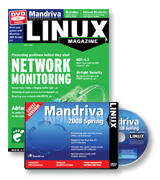
Cover Theme: Network Monitoring
DVD Theme: Mandriva 2008 Spring
Article Code
This month we examine monitoring tools and tricks so you can discover problems before they develop. We look at some helpful monitoring tools, including Hobbit, Nagios, and Monit. You'll learn how to build and interpret MRTG graphs, watch your logs with check_logfiles, and watch your systems with a Nagios traffic light.
Other articles examine the new Gnome and GCC 4.3, the Adriane audio desktop system, Inkscape, Rhythmbox, FreeMind, and phpLogCon.
Issue 91 Jun 2008
Buy this issue as a PDF
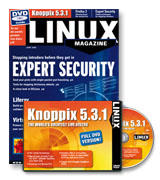
Cover Theme: Expert Security
DVD Theme: Knoppix 5.3.1
Article Code
Internet intruders have many ingenious ways of escalating privileges and hiding their presence once they get inside your system. The best protection is to keep them out in the cold. In this issue, we focus on keeping your systems secure. We look at single-packet port knocking, tools for stopping dictionary attacks, and take a close look at SELinux.
Other articles in this issue look at Sshutout and Fail2ban, access control lists, the new Mozilla Firefox, Freenet, Liferay, Sandboxing, rsyslog, configuring a virtual web server, and more.
Issue 90 May 2008
Buy this issue as a PDF
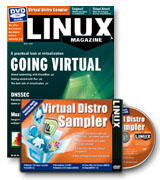
Cover Theme: Going Virtual
DVD Theme: Virtual Distro Sampler
Article Code
Going Virtual: This month, we take an in-depth look at virtualization. We show you how to get started with Xen, we look inside Innotek’s VirtualBox virtualization tool, and we examine a new breed of rootkits that will exploit the powers of virtualization.
Other articles show you how to create digital photo albums with Album Shaper, let your web applications escape the confines of the browser interface with Mozilla's Prism, graph your portfolio's performance with Perl, and dig into DNS Security Extensions.
Issue 89 Apr 2008
Buy this issue as a PDF
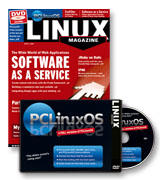
Cover Theme: Software as a Service
DVD Theme: PCLinuxOS
Article Code
Software as a Service: You can find a web service that does almost anything your home computer can do. This month, we study the world of Software as a Service (SaaS) for Linux users.
We introduce you to the openSUSE Build Service and the Prado PHP-development environment. Also, we look at third-party e-commerce payment services and some handy utilities that will help you integrate Google services into your conventional operating environment.
Issue 88 Mar 2008
Buy this issue as a PDF
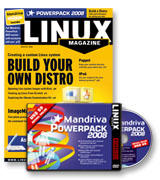
Cover Theme: Build Your Own Distro
DVD Theme: Mandriva POWERPACK 2008
Article Code
Build Your Own Distro: We look at tools and techniques for creating custom Linux systems, including Linux From Scratch, NimbleX Live CD Generator, Kiwi image system, and the Ubuntu Customization Kit.
You'll also learn more about connecting a MIDI instrument to your Linux sound system, Puppy Linux, backing up your laptop with Box Backup, IPv6, Puppet, isp-switch, Gnash, ImageMagick, DokuWiki, MPlayer, and the Asus Eee PC.
Issue 87 Feb 2008
Buy this issue as a PDF
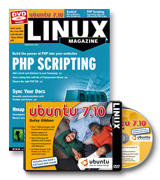
Cover Theme: PHP Scripting
DVD Theme: Ubuntu 7.10 "Gutsy Gibbon"
Article Code
PHP Scripting: The PHP scripting language is one of the most powerful tools in the web developer's toolkit. This month we examine PHP in the Linux world. We tour some PHP development environments and examine a few important resources for PHP developers.
Other articles show you how to manage your schedule with Mozilla's Sunbird, keep documents in sync with Conduit and Unison, create your own udev rules, serve Outlook clients from Linux with Zarafa, root out power hogs with PowerTOP, and keep your calendar and contact data in sync with Funambol.
Issue 86 Jan 2008
Buy this issue as a PDF
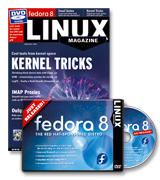
Cover Theme: Kernel Tricks
DVD Theme: Fedora 8
Article Code
Kernel Tricks: Developers are constantly looking for new ways to interact with the versatile Linux kernel. This month we study some innovative projects leading deep into kernel space. We'll examine userspace drivers, Cloop, KVM, and LogFS.
Other highlights include an in-depth look at email suites, Adobe Reader vs. Xpdf and Evince, 64 Studio and JAD audio distros, Plone 3.0, the Outguess command-line steganography app, IMAP proxies, the Vim editor, the Hotwire graphical shell, Gobby editing tool, OpenOffice.org extensions, and tools for converting text formats.
Subscribe to our Linux Newsletters
Find Linux and Open Source Jobs
Subscribe to our ADMIN Newsletters
Support Our Work
Linux Magazine content is made possible with support from readers like you. Please consider contributing when you’ve found an article to be beneficial.

News
-
United Nations Open Source Portal Goes Live
A new open source portal seeks to coordinate and scale open source efforts across the United Nations system.
-
KDE Linux Drops AUR
KDE Linux developers have dropped the Arch User Repository from the build pipeline due to security concerns; other distributions should consider doing the same.
-
California May Exempt Linux from Its Age-Verification Law
After backlash from the Linux community, California may be backing off on its promise to force all operating systems to verify age, but one platform may still have to comply.
-
Another Logic Bug Found in Linux Kernel
Qualys has discovered a vulnerability in the Linux kernel that can be used to elevate standard user privileges.
-
Ubuntu Core 26 Offers Game-Changing Enterprise Features
Ubuntu Core 26 could be a game-changer for organizations looking for increased security and reliability.
-
AI Flooding the Linux Kernel Security Mailing List
AI is giving Linus Torvalds a headache, but not in the way you might think.
-
Top Priorities for Open Source Pros Seeking a New Job
Professional fulfillment tops the list, according to LPI report.
-
Container-Based Fedora Hummingbird Designed for Agent-First Builders
Fedora Hummingbird brings the same approach to the host OS as it does to containers to level up security.
-
Linux kernel Developers Considering a Kill Switch
With the rise of Linux vulnerabilities, the kernel developers are now considering adding a component that could help temporarily mitigate against them… in the form of a kill switch.
-
Fedora 44 Now Gaming Ready
The latest version of Fedora has been released with gaming support.